HomeTokugawa Ieyasu
No. 07 · Japan
Tokugawa Ieyasu
The last of Japan's three unifiers, and the one who made the victory last.
1543–1616
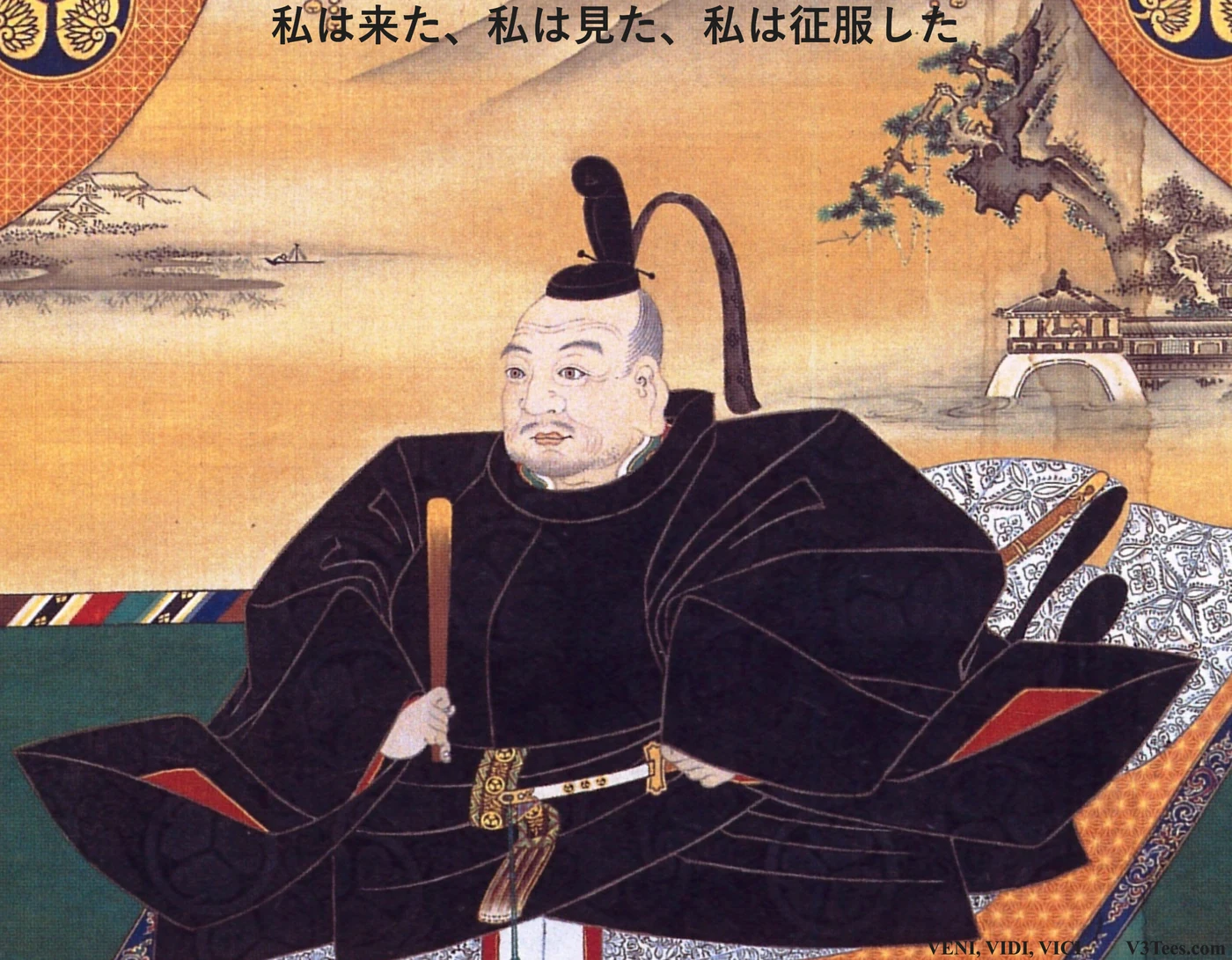
Japanese私は来た、私は見た、私は征服した
History
Tokugawa Ieyasu was born in 1543 as Matsudaira Takechiyo, heir of a small house in Mikawa, squeezed between the Oda of Owari and the Imagawa of Suruga. As a child he was a hostage, for a long stretch in Imagawa hands. That was the ordinary fate of a minor heir in the Sengoku period, and it was a thorough education in other people's promises. After Imagawa Yoshimoto was killed at Okehazama in 1560, he made himself independent and allied with Oda Nobunaga. He fought in Nobunaga's wars, including the battle of Nagashino in 1575. When Nobunaga was killed in 1582, Ieyasu survived the first scramble, then submitted, carefully, to Toyotomi Hideyoshi, the general who carried Nobunaga's conquest of Japan through to a single regime.
Hideyoshi moved him off his ancestral ground and gave him the Kantō plain, with a castle town at Edo. The grant looked like a reward and worked as a removal from the capital. It became the base of everything afterward. Hideyoshi died in 1598, leaving a child heir, Hideyori, and a council of regents who did not intend to share power for long. Ieyasu was the strongest of them. On 21 October 1600, at Sekigahara on the Nakasendō between Kyoto and Edo, his eastern coalition defeated the western army associated with Ishida Mitsunari. The afternoon turned when Kobayakawa Hideaki, brought to the field on the western side, joined Ieyasu instead. The battle made Ieyasu the first man in Japan. It did not yet make his house safe.
In 1603 the emperor named him shogun. He resigned the title in 1605 in favor of his son Hidetada and kept the real authority, a pattern the Tokugawa house would repeat. The Toyotomi name was still alive. Hideyori held Osaka Castle, and plenty of lords remembered his father. Ieyasu destroyed that remnant in two campaigns, the winter siege of 1614 and the summer campaign of 1615. Hideyori died. The last serious alternative to Tokugawa rule died with him. Ieyasu himself died in 1616. He was deified as Tōshō Daigongen, and the great shrine at Nikkō, built up by his successors, became the center of that cult. The shogunate he founded governed until 1868.
He is the third of the Japanese unifiers, and the one who kept what the others had seized. Nobunaga broke the old order and died in a vassal's coup. Hideyoshi, of humble birth, climbed to rule of the country and spent his last years on a disastrous invasion of Korea. Ieyasu fought both men when he had to, served both when he had to, and outlived them. The shirt shows a traditional formal portrait and prints the three verbs across it in Japanese. In his case the conquest looked, for long stretches, like waiting.
About the art
The image is a traditional formal portrait of Tokugawa Ieyasu seated in black court dress and a tall cap, inside a gold border of clouds of the kind used in Japanese painting. Formal portraits of him were made in the Edo period for a ruler who was also, after his death, a deity at Nikkō. This print belongs to that public-domain portrait tradition. The Japanese sentence across the upper field, 私は来た、私は見た、私は征服した, is the brand's rendering of the three verbs. The wording is modern. It is not a motto copied from his letters.
Buy on Amazon
Tokugawa Ieyasu is printed and sold by Amazon Merch on Demand. Choose a product and a marketplace. United States listings come first. Prices change, so they are not listed here.
Standard t-shirt
Premium t-shirt
iPhone case
As an Amazon product, orders, shipping and returns are handled by Amazon.