HomeSun Tzu
No. 05 · China
Sun Tzu
The name on The Art of War, the short book behind centuries of strategy.
Spring and Autumn period
History
Sun Tzu is the name attached to The Art of War, the short Chinese military classic known as Sunzi bingfa. In the traditional account he was Sun Wu, a commander in the service of King Helü of the state of Wu in the late sixth century BCE, during the Spring and Autumn period, and a rough contemporary of Confucius. Sima Qian, writing in the early Han dynasty, gives him a biography of a kind. It includes a story in which Sun Wu drills the king's palace women as if they were soldiers and has two of the king's favorites executed to prove that an order will be obeyed. Most historians treat that episode as legend. The book is on firmer ground than the man.
The text that has come down is thirteen chapters. Its language, and its picture of large infantry armies and of rival states bargaining and betraying, leads many scholars to place the received work later than Helü's reign, in the Warring States period, or to see it as a book built up in layers rather than as notes from one campaign. By the Han dynasty it was already a canonical military text, one of the works a Chinese commander was expected to know. Japanese, Korean, and Vietnamese military culture read it in turn. Modern staff colleges have kept it on the shelf for reasons that run well past the wars of the state of Wu.
What the book argues is plainer than its reputation. War is a grave matter for the state, costly, and easy to begin badly. A commander has to know the ground, the weather, the supply line, and both courts, his own and the enemy's. Deception is a normal instrument: appear where you are not expected, and do not let the other side see your disposition. Battle is not the highest skill. The better result is to win by undoing the enemy's strategy, or his alliances, before cities are stormed and armies are spent. This is a theory of economy written long before that phrase existed. It assumes a thinking opponent and a ruler who may be the commander's real problem.
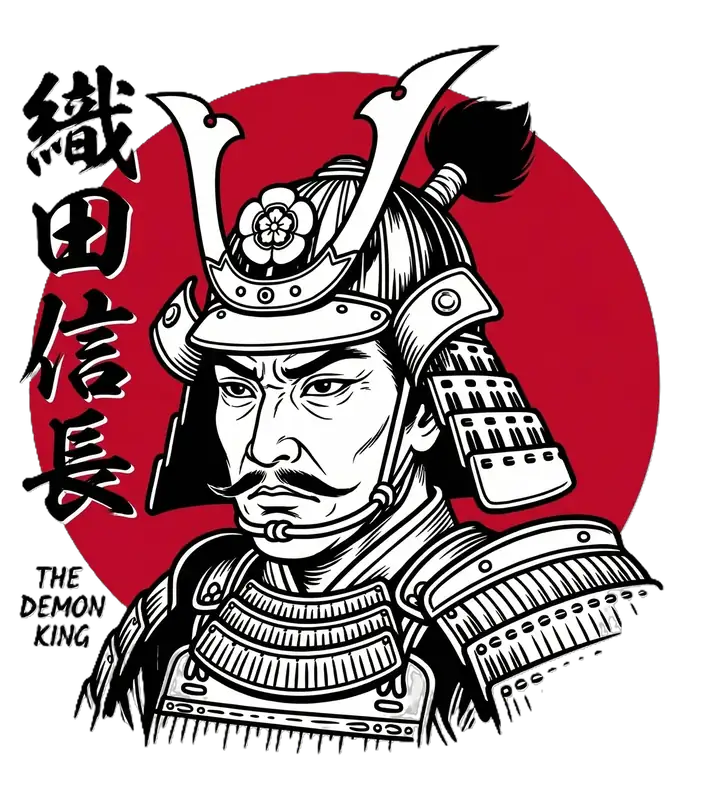
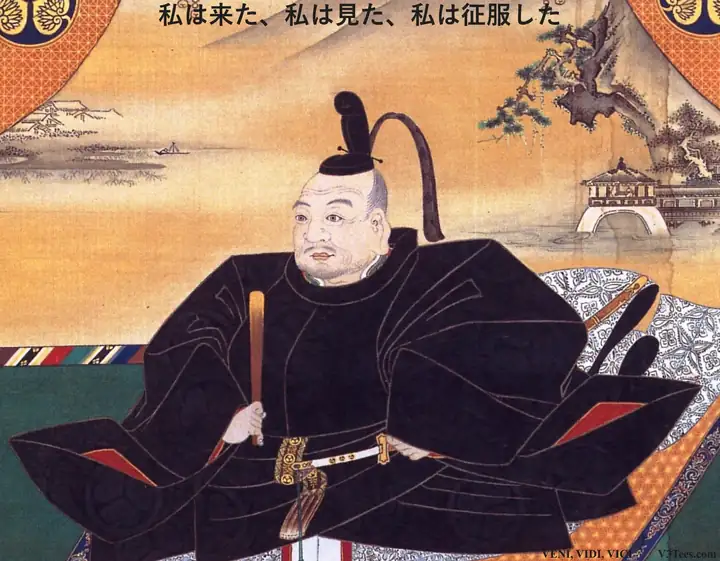
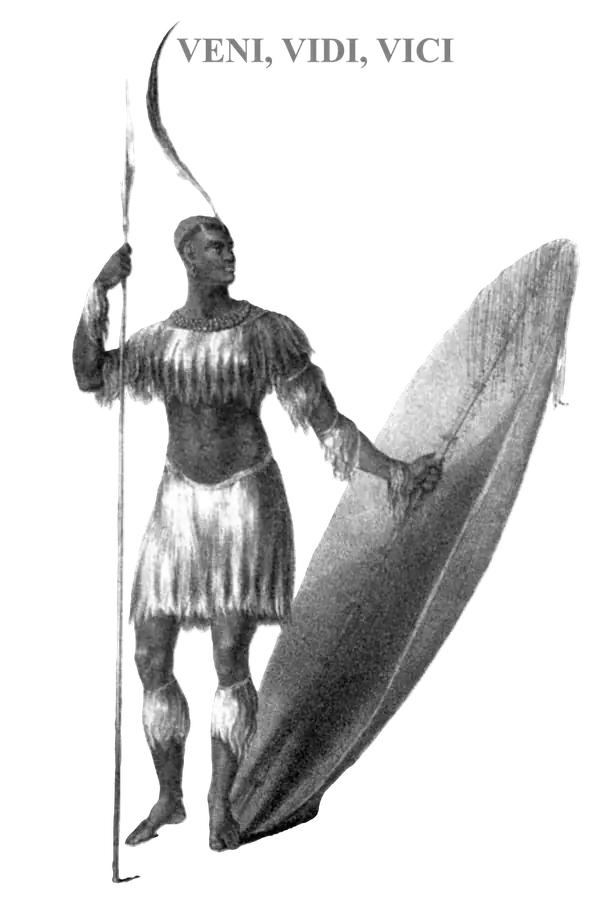
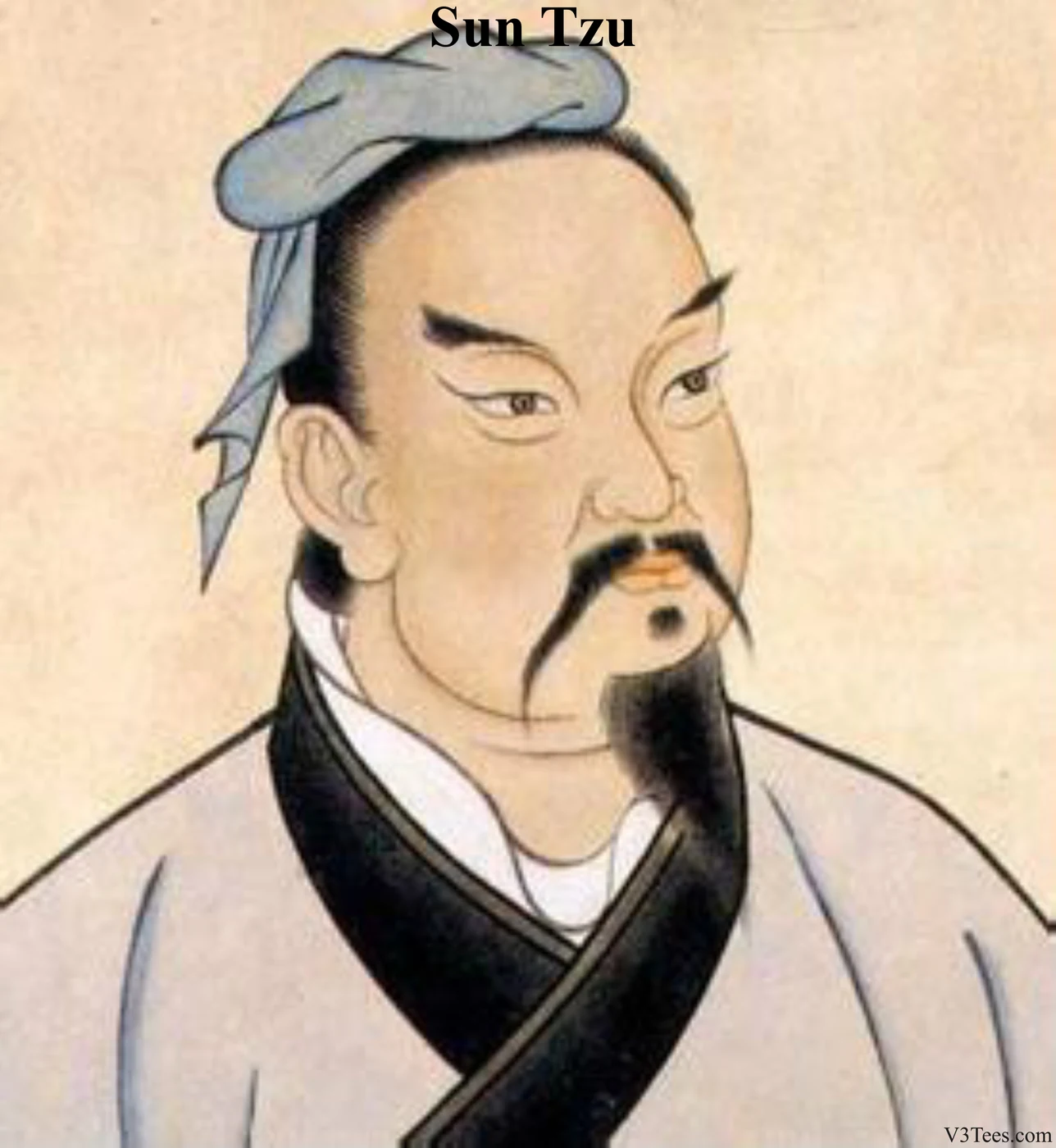
Every other mortal figure in this lineup led troops in person. Caesar wrote his own campaigns to justify them. Nobunaga and Shaka changed how their soldiers fought on the day. Alexander won the kind of head-on battle this book treats as a last resort, after the cheaper ways have failed. Sun Tzu is the book on the shelf behind them. He is here because a catalog of commanders that never includes the text they are still read against is only half a catalog. The portrait on the shirt does not pretend to be a face from life. No such face exists, and the historical person behind the name may not have been one man.
About the art
The image is a traditional Chinese portrait of a bearded scholar-official in pale robes and a black cap, labeled Sun Tzu. No portrait from the lifetime of Sun Wu survives, and the man behind the name is itself uncertain. Paintings of this kind are later conventions: a calm face, an official's hat, an empty ground. This one is public domain. The label at the top identifies him for the shirt. It should be read as a name, not as evidence of a sitting from life.
Buy on Amazon
Sun Tzu is printed and sold by Amazon Merch on Demand. Choose a product and a marketplace. United States listings come first. Prices change, so they are not listed here.
Standard t-shirt
Premium t-shirt
As an Amazon product, orders, shipping and returns are handled by Amazon.